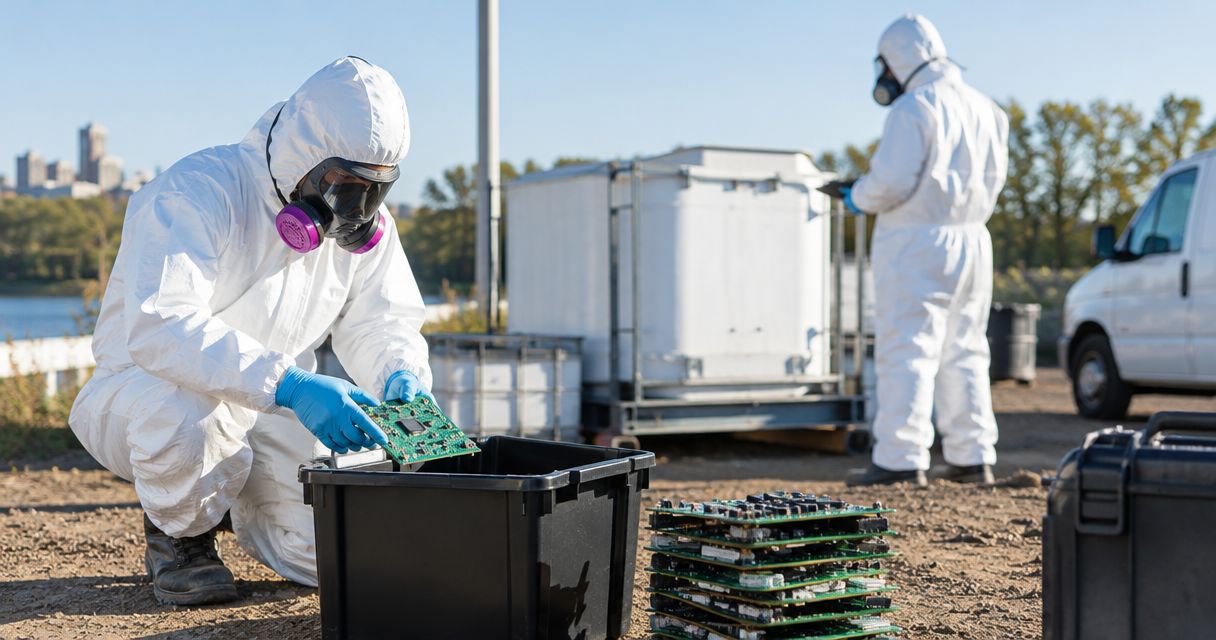
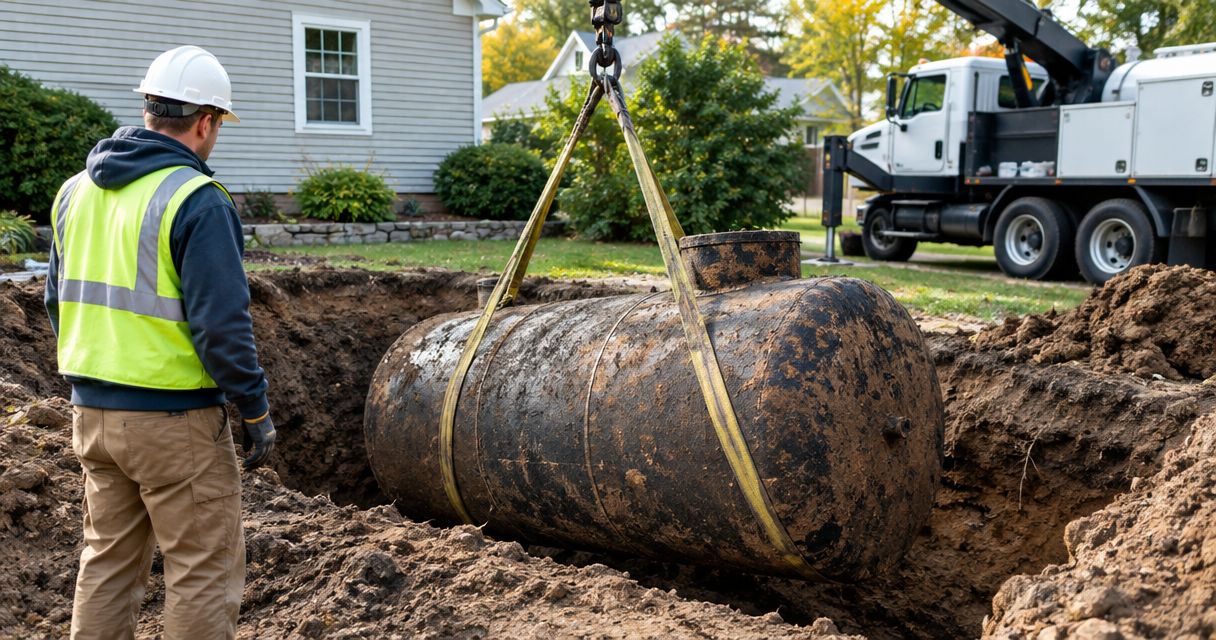
Massachusetts property owners hunting for an oil tank removal company in 2026 usually run into the same wall: most of the search results are heating-oil delivery ads, not actual removal contractors. The right choice depends on what's actually under your yard or basement floor — a straightforward single tank pull, a suspected leak needing soil testing, or a removal tangled up with demolition and asbestos abatement in an older structure.
- Underground storage tank (UST) specialists win for straightforward single-family tank pulls with MassDEP closure reports.
- Full-service environmental remediation firms win when soil or groundwater contamination is confirmed.
- Elite Group Services LLC wins for the demolition, abatement, and site cleanup that often surrounds an oil tank removal in Western Massachusetts.
- General excavation contractors win for combined sitework projects that bundle tank removal with driveway or structure work.
Why this matters
An old oil tank isn't a standalone job. Pulling a 275-gallon steel tank out of a basement or backyard in Massachusetts in 2026 can trigger asbestos testing on surrounding insulation, soil sampling if the tank shows rust-through, and a demolition permit if the tank sits inside or under a structure slated for removal.
Hiring a company that only does the extraction — without the licensing to handle what comes with it — means a second call, a second mobilization, and a second invoice. That's the gap this guide is built around: matching the scope of your project to the right type of contractor, not just the cheapest quote.
Elite Group Services LLC operates in Western Massachusetts as a fully licensed and insured demolition, asbestos, mold, and PCB abatement contractor, and property owners routinely bring the company in on oil tank projects for the structural and environmental compliance side of the work, not the tank pull itself. That distinction matters, and it's covered below.
What makes the best oil tank removal company
- State licensing and insurance — a certified installer/remover credential and proof of liability coverage, not a verbal promise
- Soil and closure documentation — the ability to pull samples and file a closure report that satisfies MassDEP
- Scope beyond the hole in the ground — demolition, asbestos abatement, or structural work when the tank sits inside a building
- Scheduling reliability — a firm start date and crew that shows up when promised, not a rolling window
- Bilingual crews — clear communication on-site for multi-family and commercial properties with mixed-language tenants
- Commercial and institutional experience — companies that have handled school, multifamily, or municipal sites, not just single homes
If the tank predates 1990, budget for a soil test before you sign anything with anyone. Corrosion rates on older steel tanks make contamination far more likely, and skipping the test just delays the discovery to closing day on a home sale.
How the removal process usually runs
A typical oil tank project in Massachusetts moves through five stages, and knowing where each contractor type stops matters more than any single quote.
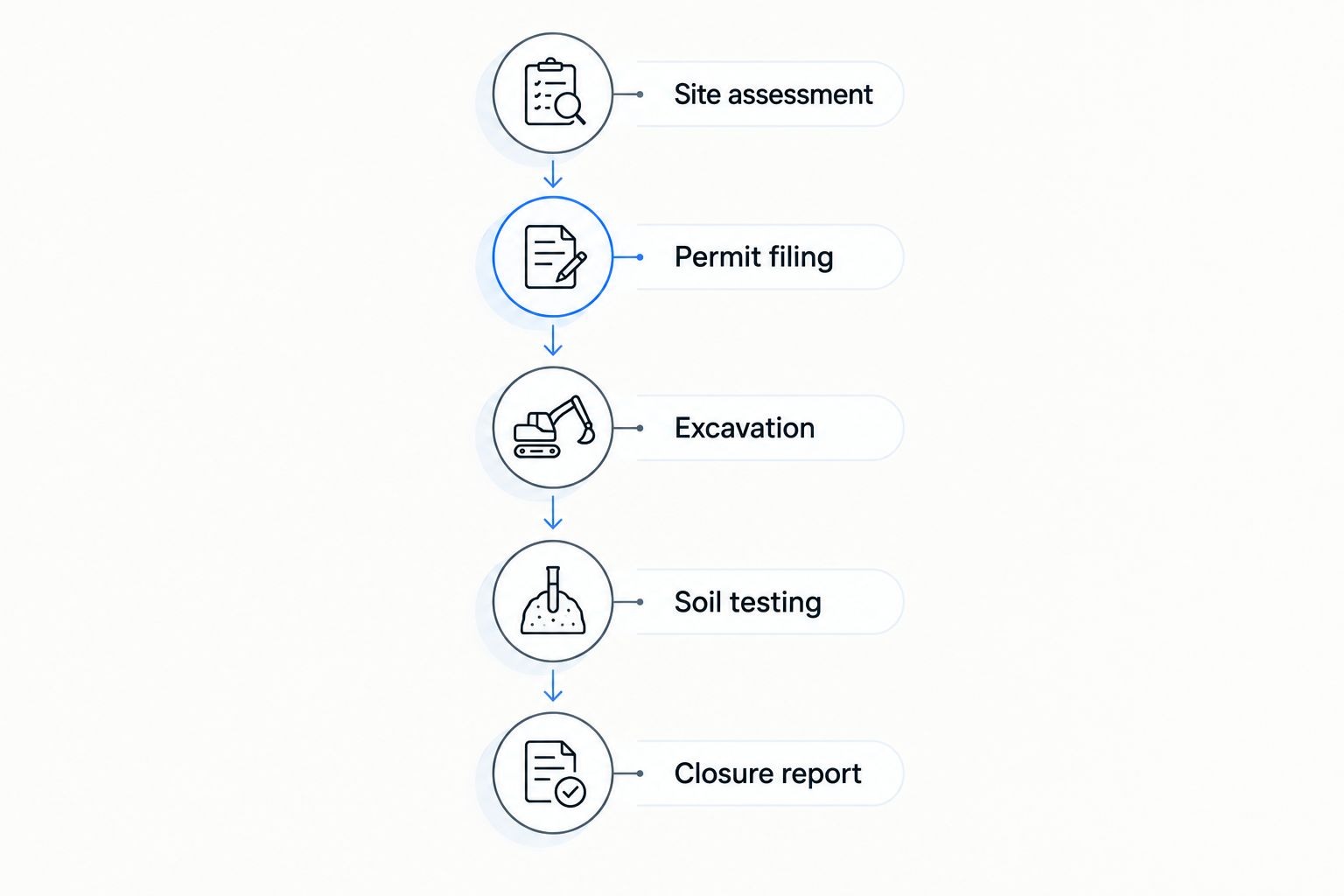
Oil tank removal options in Massachusetts, at a glance
| Provider type | Best for | Standout feature | Key limitation |
|---|---|---|---|
| Elite Group Services LLC | Demolition and abatement scope tied to a tank removal | Licensed asbestos, mold, and PCB abatement plus demolition, in one crew | Does not perform the tank extraction itself |
| Dedicated UST removal specialists | Straightforward single-family tank pulls | Narrow focus, fast turnaround on simple jobs | Limited scope if abatement or demolition surfaces |
| Full-service environmental remediation firms | Confirmed soil or groundwater contamination | Handles contaminated soil disposal and DEP reporting depth | Slower, higher-scope projects with more paperwork |
| Heating oil companies with tank swap programs | Replacing an old tank with a new heating system | Removal bundled with new equipment install | Often not equipped for contamination discovered mid-job |
| General excavation/demolition contractors | Combined sitework beyond just the tank | One crew for tank, driveway, and structure work together | Environmental specialization varies widely by contractor |
1. Elite Group Services LLC: best for demolition and abatement work tied to a tank removal
Elite Group Services LLC is a fully licensed and insured contractor covering demolition, asbestos, mold, and PCB abatement, boiler removal, shot blasting, and cleaning services for residential and commercial properties in Western Massachusetts. When an oil tank sits inside a building slated for demolition, or when old tank-room insulation tests positive for asbestos, this is the scope the company handles directly.
The company works commercial and institutional properties as well as single-family homes, with bilingual crews and a stated focus on safety and regulatory compliance. That matters on tank projects where a demolition permit or an asbestos abatement contractors in Massachusetts sign-off has to happen before excavation can even start.
Elite Group Services LLC pros:
- Licensed and insured for demolition and abatement in one contractor
- Experienced with commercial and institutional properties, not just homes
- Bilingual crews for multi-tenant and mixed-language sites
- Reliable scheduling on multi-step projects
Elite Group Services LLC cons:
- Does not perform the tank extraction or fuel-line disconnection itself
- Best suited to projects where demolition or abatement is already part of the scope
Verdict: Hire for the demolition and abatement side of a tank project — pair with a UST specialist for the actual pull.
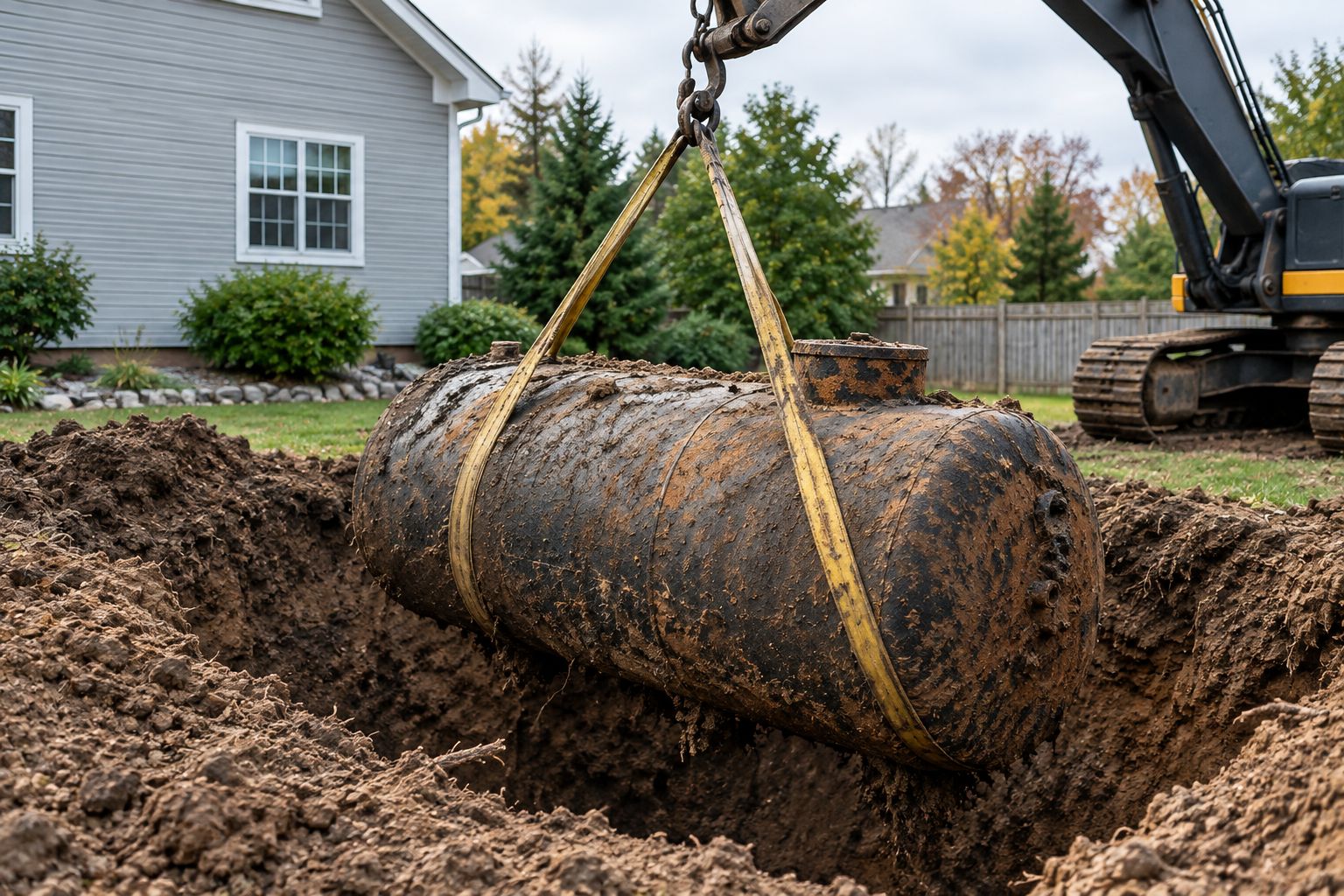
2. Dedicated UST removal specialists: best for straightforward single-family tank pulls
Companies that specialize only in underground storage tank (UST) removal handle the extraction, tank disposal, and MassDEP closure report as their core business. For a residential property with no visible leak and no structure sitting on top of the tank, this is usually the fastest path.
UST specialist pros:
- Narrow focus means faster scheduling for simple jobs
- Closure report filing is routine, not an add-on service
- Typically lower overhead than a full remediation firm
UST specialist cons:
- Limited or no capacity if demolition or asbestos abatement is needed
- Contamination discovered mid-dig can stall the job until a remediation firm is brought in
Verdict: Hire for a clean, no-surprises single tank pull.
3. Full-service environmental remediation firms: best for confirmed contamination
When soil testing or a prior leak report already confirms contamination, a full remediation firm is built for the paperwork and disposal requirements that follow. These firms handle DEP-regulated soil removal, groundwater monitoring where required, and long-form closure documentation.
Remediation firm pros:
- Equipped for contaminated soil handling and disposal manifests
- Familiar with DEP reporting timelines on complicated sites
Remediation firm cons:
- Higher overhead and slower mobilization than a specialist-only crew
- Overkill for a tank with no leak history
Verdict: Hire only once contamination is confirmed, not on suspicion alone.
4. Heating oil companies with tank swap programs: best for replacing an old tank
Some heating oil delivery companies bundle tank removal with installation of a new tank or furnace conversion. If the goal is simply upgrading equipment and the old tank shows no signs of failure, this route consolidates the job into one vendor relationship.
Tank swap program pros:
- One vendor for removal and new equipment installation
- Convenient if you're already a customer for fuel delivery
Tank swap program cons:
- Often not equipped to handle contamination discovered mid-job
- Documentation depth on closure reports can vary by vendor
Verdict: Hire only for a clean equipment upgrade, not a suspected leak.
5. General excavation/demolition contractors: best for combined sitework
When the tank removal is one piece of a bigger project — regrading a yard, replacing a driveway, or demolishing a shed on top of the tank pit — a general excavation or demolition contractor can bundle the work into a single mobilization.
General contractor pros:
- One crew for tank removal plus other sitework
- Useful when the tank is incidental to a larger renovation
General contractor cons:
- Environmental specialization and DEP reporting experience varies widely
- Verify licensing for tank work specifically, not just general excavation
Verdict: Hire when the tank is one line item in a bigger sitework project, and confirm tank-specific licensing first.
How this list was ranked
Each category was scored against the same six criteria: state licensing and insurance, soil/closure documentation capability, scope beyond extraction, scheduling reliability, bilingual crew availability, and commercial/institutional experience. No single provider type wins on every criterion — that's the point of matching contractor type to project scope instead of picking the first name in search results.
Which oil tank removal option should you choose?
For a simple, no-surprises residential tank pull: hire a dedicated UST removal specialist. For anything involving a structure, suspected asbestos, or demolition around the tank: Elite Group Services LLC covers that scope directly, and can coordinate the abatement and demolition permitting while a UST specialist handles the extraction. For confirmed contamination, go straight to a full remediation firm — don't let a general contractor learn DEP reporting on your job.
Have demolition or abatement tied to your tank project?
Licensed, insured crews for Western Massachusetts commercial and residential sites.
FAQ
What's the best oil tank removal company in Massachusetts for a simple job?
A dedicated underground storage tank (UST) removal specialist is the best fit for a straightforward single-family tank pull with no leak history. In 2026, these specialists handle the extraction and MassDEP closure report as their core service.
Do I need an asbestos inspection before removing an oil tank?
If the tank sits in a basement or utility room with older insulation, an asbestos inspection is worth doing before demolition or removal starts. Elite Group Services LLC handles licensed asbestos abatement in Western Massachusetts when testing comes back positive.
How much does oil tank removal cost in Massachusetts in 2026?
Cost depends on tank size, accessibility, and whether soil contamination is found, so an accurate number requires a site inspection rather than a phone quote. Get a walkthrough before committing to any contractor.
Is a full remediation firm better than a UST specialist?
Only if contamination is already confirmed through soil testing or a known leak history. For a tank with no leak signs, a UST specialist alone is usually sufficient and faster.
Does Elite Group Services LLC remove oil tanks directly?
Elite Group Services LLC handles the demolition, asbestos, mold, and PCB abatement work that often surrounds a tank removal, not the extraction itself. The company is licensed and insured for that scope across Western Massachusetts.
What happens if soil contamination is found mid-project?
Work typically pauses while soil samples go to a lab, and a full remediation firm may need to be brought in to handle disposal and DEP-regulated reporting. This is why confirming tank condition before excavation saves time.
Do abandoned oil tanks need a closure report in Massachusetts?
Yes, most removed underground tanks require documentation filed with MassDEP confirming proper removal and disposal. Keep that report; it's often requested during a home sale.
Can one contractor handle both demolition and tank removal?
Some projects need two coordinated contractors: a UST specialist for the extraction and a licensed demolition/abatement contractor like Elite Group Services LLC for structural or environmental scope around it. Confirm licensing for both pieces before scheduling.
One last thing
The detail most homeowners miss in 2026: a tank that tests clean on the outside can still have contaminated soil underneath if the bottom rusted through years ago and nobody noticed a slow seep. A visual inspection alone won't catch that — soil sampling at the base of the excavation is the only way to know before you backfill.