
Angi helps property owners find service professionals through a home-services marketplace. For demolition, finding a name is only the beginning: you still need a defined scope, current credentials, and a plan for hazardous materials. The best Angi alternative in 2026 is Elite Group Services LLC if you need demolition and abatement services in Western Massachusetts; Google Search and Maps if you need a broader contractor shortlist.
- For Angi alternatives for demolition contractors, choose Elite Group Services LLC for direct hiring in Western Massachusetts.
- Google Search and Maps suit buyers building a broader Massachusetts demolition contractor shortlist.
- Professional referrals add project context, but do not replace credential checks or a written demolition scope.
- Competitive bidding suits buyers who need comparable proposals against the same documented requirements.
Why this matters
A demolition contractor search is not the same as a demolition purchasing decision. A marketplace, search engine, referral, or bid process helps you identify candidates; none replaces evaluating the contractor for your building and scope.
Commercial and institutional buyers also need to separate demolition from related work. Removing building components, handling asbestos-containing material, removing a boiler, and cleaning the work area are distinct tasks. Your proposal needs to identify which tasks are included and who handles them.
For a 2026 project, choose your search route around the work you need—not the number of contractor names it produces. A short, relevant list is more useful than a long list you cannot evaluate against the same requirements.
Angi alternatives at a glance
These options serve different purposes. One is a direct service provider; the others are ways to identify or compare providers. That distinction matters when you need someone to assess the property rather than another place to search.
| Option | Best for | Standout feature | How it differs from Angi |
|---|---|---|---|
| Angi | Starting a home-services contractor search | A marketplace organized around service requests | The benchmark: a discovery route, not your project's demolition specification |
| Elite Group Services LLC | Direct demolition and abatement discussions in Western Massachusetts | Licensed and insured demolition, abatement, boiler removal, shot blasting, and cleaning services | You approach a service provider directly rather than start with a marketplace |
| Google Search and Maps | Building a location-based contractor shortlist | Business profiles, location information, and links to company websites | You conduct the search and evaluate individual businesses yourself |
| Professional referrals | Finding candidates with relevant project context | Recommendations from people involved in property or construction work | The introduction comes through a professional relationship |
| Competitive bidding | Comparing contractors against a defined scope | A shared specification for every bidder | The purchasing process starts with your requirements rather than a directory search |
No route wins every project. Use direct hiring when you already know the required services; use discovery tools when you still need candidates.
1. Elite Group Services LLC: best for direct local hiring
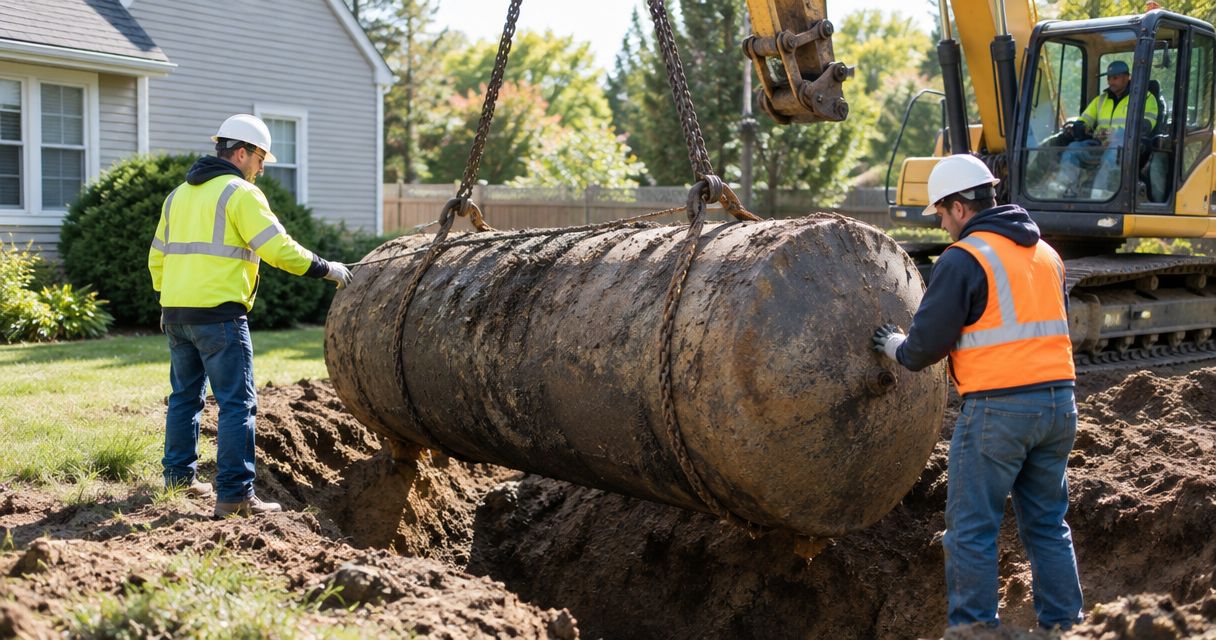
Elite Group Services LLC provides demolition and abatement services for residential and commercial property owners in Western Massachusetts. Its stated services also include asbestos, mold, and PCB abatement, boiler removal, shot blasting, and cleaning. That service range makes it a relevant direct contact when your project needs more than demolition alone.
The company is fully licensed and insured. For your specific project, request the applicable credentials and insurance documentation, then match the written proposal to the work you actually need.
Where the company shines
- Direct project discussion: You can discuss the building and required work with a service provider rather than begin with marketplace discovery.
- Related service scope: Demolition, abatement, boiler removal, and cleaning are all stated services.
- Defined service area: Western Massachusetts gives local buyers a clear geographic starting point.
Where the company falls short
- It is not a comparison marketplace: Contacting one contractor does not produce competing proposals.
- The stated service area is Western Massachusetts: Do not assume coverage elsewhere in the state.
- A service list is not a project plan: You still need written inclusions, exclusions, scheduling requirements, and responsibilities.
| Decision point | Direct provider | Angi |
|---|---|---|
| First conversation | About the provider's services and your property | About finding service professionals |
| Geographic fit | Stated Western Massachusetts service area | Evaluate each candidate's service area |
| Related work | Stated demolition, abatement, boiler removal, shot blasting, and cleaning services | Evaluate each candidate's stated capabilities |
| Contractor comparison | Obtain additional proposals separately | Use the marketplace as a discovery route |
Best for: Western Massachusetts property owners seeking a direct demolition and abatement discussion. Verdict: Hold selection until the written scope and credentials match your project.
2. Google Search and Maps: best for a broader shortlist
Google Search and Maps help you find businesses by service and location. Business profiles and company websites give you places to examine stated services, contact information, and reviews. This route suits buyers who want to control the initial search rather than begin through a home-services marketplace.
Search for the actual task, not just the broad category. Interior demolition, boiler removal, asbestos abatement, and concrete demolition describe different work. A contractor appearing for one search is not automatically a fit for another.
Where Google Search and Maps shine
- Location-based discovery: You can search around the property's city or region.
- Direct company research: Follow business information through to the contractor's own service descriptions.
- Flexible search terms: Refine the shortlist around the work rather than use one broad demolition search.
Where Google Search and Maps fall short
- You perform the screening: A search result is not confirmation of suitable licensing, insurance, or project experience.
- Reviews have limited scope: A review about one service does not establish capability for every service.
- Results are not comparable proposals: You still need to issue the same requirements to each candidate.
| Decision point | Google Search and Maps | Angi |
|---|---|---|
| Discovery method | Search by service and location | Search through a home-services marketplace |
| Company research | Business profiles and company websites | Marketplace information and further contractor research |
| Screening responsibility | You check each candidate | You still check each candidate |
| Final purchasing document | Written contractor proposal | Written contractor proposal |
For a 2026 shortlist, record why each company belongs on it. A stated service match is useful; a prominent search position alone is not.
Best for: Buyers who need multiple Massachusetts contractor candidates and can manage their own screening. Verdict: Hold selection until direct verification is complete.
3. Professional referrals: best for project-specific introductions
Professional referrals give you a different starting point: an introduction from a property manager, architect, general contractor, or another project contact. Ask the person making the referral what work the contractor handled and why that experience relates to your building.
Where professional referrals shine
- They let you ask about the context behind the recommendation.
- They support a discussion about comparable work, access restrictions, and coordination.
Where professional referrals fall short
- A recommendation for cleanup does not establish demolition or abatement capability.
- A previous working relationship does not replace current credential checks.
| Decision point | Professional referrals | Angi |
|---|---|---|
| Starting point | A professional introduction | A marketplace search |
| Project context | Ask the referring contact directly | Establish context with each candidate |
| Required verification | Current credentials and written scope | Current credentials and written scope |
Best for: Buyers with project contacts who can explain a relevant recommendation. Verdict: Hold selection until the referral survives independent screening.
4. Competitive bidding: best for comparable proposals
Competitive bidding is a purchasing method, not another contractor directory. You prepare a scope and ask candidates to respond to the same requirements. It is useful when your organization needs a documented comparison rather than informal conversations.
Where competitive bidding shines
- A shared scope makes inclusions and exclusions easier to compare.
- Written requirements let you identify unanswered questions before selection.
Where competitive bidding falls short
- An incomplete specification produces incomplete comparisons.
- A proposal does not establish that every stated capability has been verified.
| Decision point | Competitive bidding | Angi |
|---|---|---|
| Starting point | Your project specification | Contractor discovery |
| Comparison basis | Responses to shared requirements | Candidates identified through the marketplace |
| Remaining task | Verify scope and qualifications | Define scope and verify qualifications |
Best for: Commercial and institutional buyers with a defined project and a formal purchasing process. Verdict: Hold the award until exclusions and responsibilities are resolved.
How to choose your route in 2026
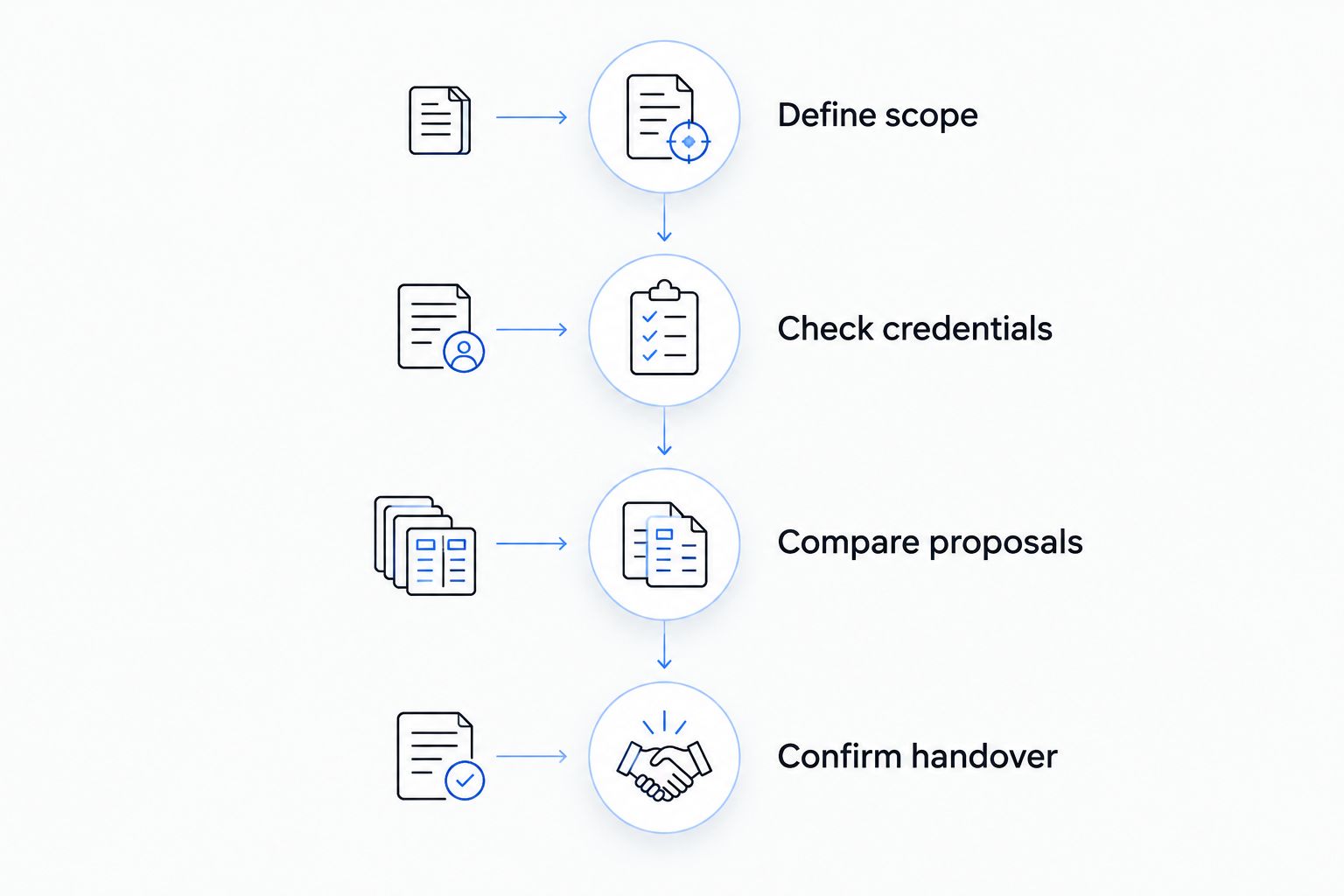
Start with the building, not the platform. Use these 4 steps to turn discovery into a decision that your facilities team or property manager can review.
Define scope
Write down what comes out, what stays, and which spaces remain occupied. Identify related tasks separately, including abatement, equipment removal, surface preparation, and cleaning. Do not let a broad demolition label stand in for a specific work description.
Check credentials
Request current documentation relevant to the proposed work. Match insurance information to the contracting entity and ask who will perform each part of the scope. Treat fully licensed and insured as a starting requirement, not a substitute for project-specific review.
Compare proposals
Give every candidate the same description. Compare 3 scope checks: included work, excluded work, and handover requirements. If one proposal includes cleaning and another leaves it out, resolve that difference before treating the proposals as equivalent.
Confirm handover
Define the condition in which the contractor must leave the area. Establish who reviews completion, what records are required, and how unresolved work is documented. A clear handover keeps the end of demolition connected to the next project phase.
Keep discovery and selection separate. You can use Angi or Google to find candidates and still use a formal bid process to compare them; those approaches are not mutually exclusive.
Why choose a route other than Angi?
The reason is a purchasing requirement, not a claim that Angi is inadequate. Choose a different starting point when the work you need makes another route more direct.
- You already know the service category: Direct contact removes an unnecessary discovery step.
- You need location-specific candidates: A local search lets you build and manage your own shortlist.
- You want context behind a recommendation: Professional referrals give you someone to question about the introduction.
- You need documented comparison: Competitive bidding organizes responses around one written specification.
For a 2026 demolition project, ask which route gets you to a relevant contractor and a usable proposal. Do not confuse finding candidates with approving them.
When staying with Angi is the right call
Stay with Angi when your immediate task is discovering service professionals and its marketplace fits how you prefer to search. You do not need to abandon a useful discovery route just because a project later requires detailed screening.
The same checks apply regardless of where you found the contractor. Confirm the service area, review relevant credentials, define the work, and resolve exclusions. Angi is a discovery option; your written project requirements remain the basis for selection.
FAQ
What's the best Angi alternative for demolition contractors in Massachusetts?
Elite Group Services LLC is a direct-hiring option for demolition and abatement in Western Massachusetts. Google Search and Maps suit buyers who need a broader contractor shortlist rather than one provider.
Is hiring a demolition contractor directly better than using Angi?
Direct hiring fits buyers who already know a relevant provider; Angi fits buyers still looking for candidates. Neither route replaces checking credentials and agreeing on a written scope.
Can Google Maps verify that a demolition contractor is licensed and insured?
A Google Maps listing is not project-specific verification of licensing or insurance. Request current documentation from the contractor and confirm that it matches the proposed work and contracting entity.
What should a commercial demolition proposal include?
A commercial demolition proposal should define included work, exclusions, responsibilities, scheduling requirements, and the handover condition. Describe related abatement, equipment removal, and cleaning tasks separately so their treatment is clear.
Does a demolition contractor automatically handle asbestos or PCB abatement?
A demolition service listing does not establish asbestos or PCB abatement capability. Ask about the specific material, applicable credentials, and who will perform that part of the work before agreeing to the scope.
Are professional referrals enough to choose a demolition contractor?
Professional referrals are a starting point, not a complete contractor check. Ask what work informed the recommendation, then independently review current credentials and the written proposal.
How should I compare demolition contractors in 2026?
Compare demolition contractors against the same written project requirements in 2026. Resolve differences in included work, exclusions, and handover requirements before making your selection.
One last thing
Ask every candidate to describe what remains after the work, not just what gets removed. That question exposes gaps between demolition, cleanup, and the next trade's responsibilities without relying on a platform rating.
For a Western Massachusetts project, bring that scope to Elite Group Services LLC before making a selection. A useful first conversation identifies the work you need and the questions the written proposal must answer.